Equipment is the largest single line in most food budgets and the one most likely to move an opening date.
Lead times are the reason. A standard reach-in cooler ships in days. A custom hood, a walk-in box, a specialty oven or anything coming from a manufacturer’s queue can be eight to twelve weeks out, and that clock has to start early enough that the units arrive after the space can receive them but before final inspection needs them commissioned.
Ordering too late delays opening. Ordering too early means crates sitting in a space that is still being drywalled, getting damaged, and voiding warranty coverage.
Specified against the drawings, not a catalogue
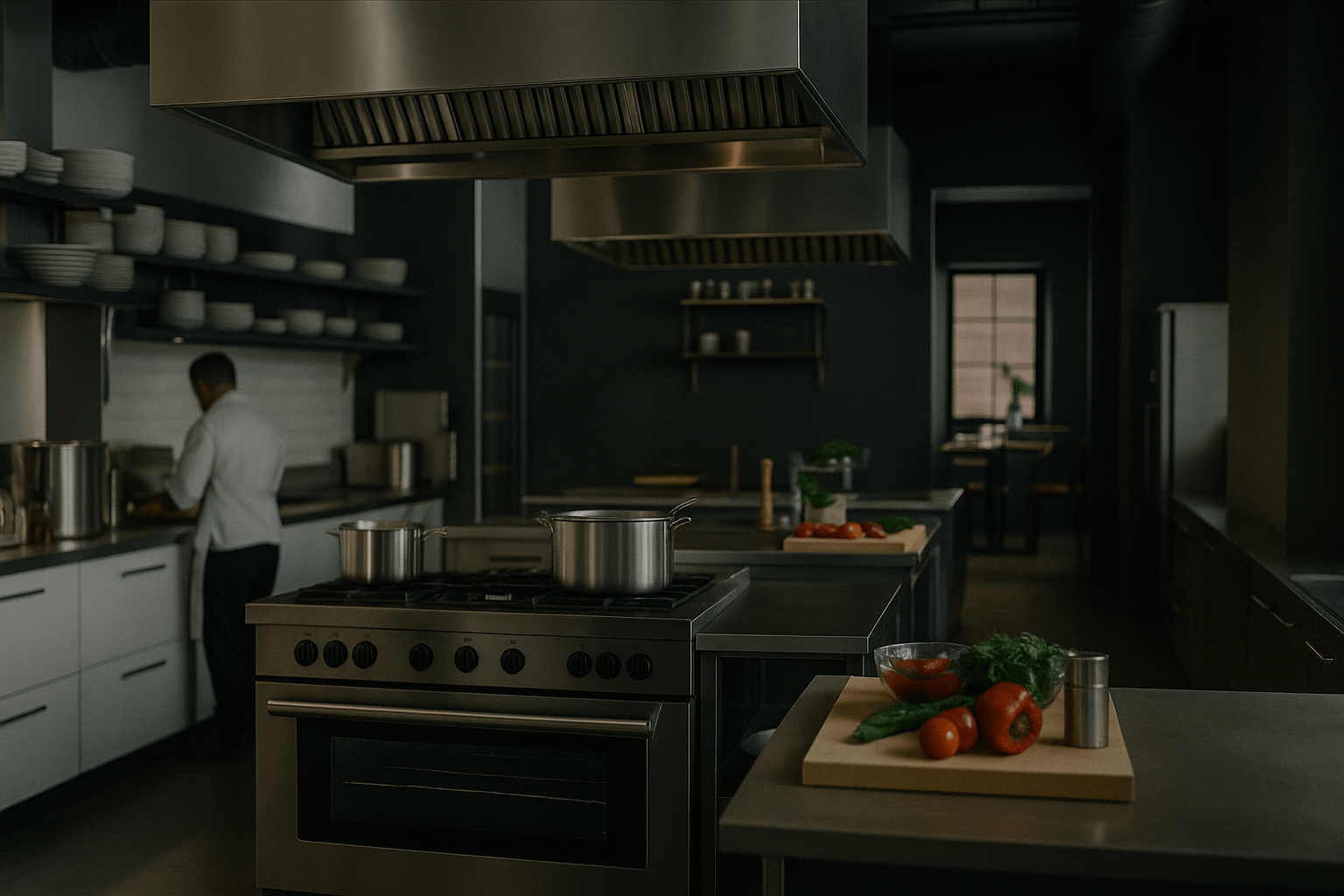
We lock the equipment package before the mechanical drawings are finalized, because the drawings depend on it.
The hood is sized to the cooking line. The panel schedule is built from the actual nameplate loads. The gas line is sized to the connected BTU. The floor drains go where the units land. Change the equipment after the set is permitted and you are amending drawings and, sometimes, resubmitting.
We source through national supplier networks, working closely with Norpex in Waterloo, who will produce a 3D kitchen layout that we reconcile against our own sheets before anything is ordered. Conflicts get resolved on paper.
Certification is not negotiable
Every unit we place is commercial-grade and carries CSA or NSF certification as applicable. This is not a preference — it is what the public health unit and the electrical inspector will look for.
Uncertified equipment, typically an import bought direct to save money, fails at final inspection when the room is otherwise ready to open. Replacing it at that point costs the unit, the freight, the reconnection and however many weeks of rent the delay consumes.
Installation and commissioning
Delivery is not installation. Units have to be set, levelled, connected to gas, water, drain and power by licensed trades, and then commissioned — which means fired, calibrated, temperature-verified and documented.
Refrigeration needs to be pulled down and holding temperature before a health inspector will sign off. Gas equipment needs TSSA approval on the connection. We coordinate that sequence so the inspection is booked against a kitchen that is genuinely ready rather than one that is nearly ready.